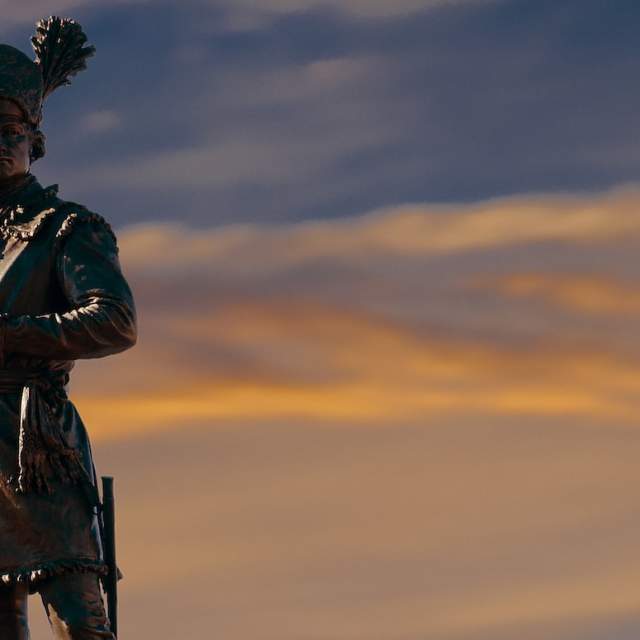
As the nation marks the 250th anniversary of the Revolutionary War, Spartanburg, SC invites travelers to experience the Southern Campaign where it unfolded — and to discover a region that pairs pivotal history with dynamic, modern culture.


Spartanburg is home to a dozen documented Revolutionary War sites, including two with immersive visitor experiences, forming one of the Southeast’s most concentrated and accessible Revolutionary War trails.


While cities like Boston and Philadelphia often dominate the founding narrative, historians note that more Revolutionary War battles and skirmishes were fought in South Carolina than in any colony except New Jersey — and many of the most decisive moments unfolded in Spartanburg County. Spartanburg itself takes its name from the Spartan Regiment, a local Patriot militia — a lasting reminder of the area’s direct connection to the fight for independence.

A Revolutionary War Trail: 12 Must-Visit Sites that Shaped the Nation


Spartanburg’s Revolutionary War history is preserved across 12 official sites, many marked with interpretive signage and several connected to state parks or trail systems. Together, they create an accessible trail-style experience ideal for history enthusiasts, families and heritage travelers.
 

  1. Daniel Morgan MonumentDowntown Spartanburg, Morgan Square
    Downtown monument honoring Gen. Daniel Morgan, hero of the Southern Campaign. Located in the heart of downtown, the monument anchors Spartanburg’s Revolutionary story.
     
  2. Walnut Grove PlantationRoebuck, near Interstate 26
    Childhood home of Kate Moore Barry and a Patriot militia gathering site. Operated by the Spartanburg County Historical Association, Walnut Grove offers seasonal tours, exhibits and public programming.
     
  3. Battle of Musgrove’s MillAlong the Enoree River, near Clinton
    Site of a major Patriot victory in August 1780 that set the stage for Kings Mountain. Today, the area is preserved as a state historic site with trails and a visitor center.
     
  4. Battle of Blackstock’s PlantationNear Enoree, overlooking the Tyger River
    Gen. Thomas Sumter defeats British forces under Banastre Tarleton. The site includes a monument, kiosk and access to the Palmetto Trail.
     
  5. Battle of Kelsey CreekInside Croft State Park, Spartanburg
    A strategic defensive action protecting critical Patriot gunpowder supplies. The site is reached by hiking trails within Croft State Park, though the exact location remains inaccessible for safety reasons.
     
  6. Battle of Cedar SpringNorth Spartanburg, near Cedar Springs Place
    A planned British night raid was thwarted after Jane Thomas warned Patriot forces, allowing them to ambush the attackers.

7. Battle of the Peach TreesNear Cedar Spring, northeast Spartanburg
Close-quarters fighting against British forces under Maj. Patrick Ferguson, one of the Crown’s most aggressive commanders in the Upcountry
 

8. Battle of Wofford’s Iron WorksAlong Lawson’s Fork Creek, Spartanburg
A running engagement following the Battle of the Peach Trees as Patriot forces withdrew north. Though the original ironworks no longer exist, the site marks continued resistance that frustrated British advances.
 

9. Battle of CowpensNear Gaffney, northeast of Spartanburg
Fought Jan. 17, 1781, this battle is considered one of the most important Patriot victories of the Revolutionary War. Cowpens National Battlefield features a visitor center, interpretive trails, an auto tour and ranger-led programs.
 

10. Battle of Earle’s FordNear Landrum, along the Pacolet River
A surprise Loyalist attack on Patriot forces in July 1780. The site is marked near the river crossing.
 

11. Wood’s FortNear Greer, along the Middle Tyger River
Originally built before the Revolution to protect settlers during conflicts involving Cherokee allies of the British.
 

12. Battle of Fort PrinceNear Wellford, close to the Greenville-Spartanburg county line
A Patriot pursuit following the Battle of Earle’s Ford  that led to the British abandonment of Fort Prince. The site marks one of several pre-Revolutionary forts built along the colonial frontier.